

Modern Coastal Home Design: How to Create an Elevated Coastal Interior
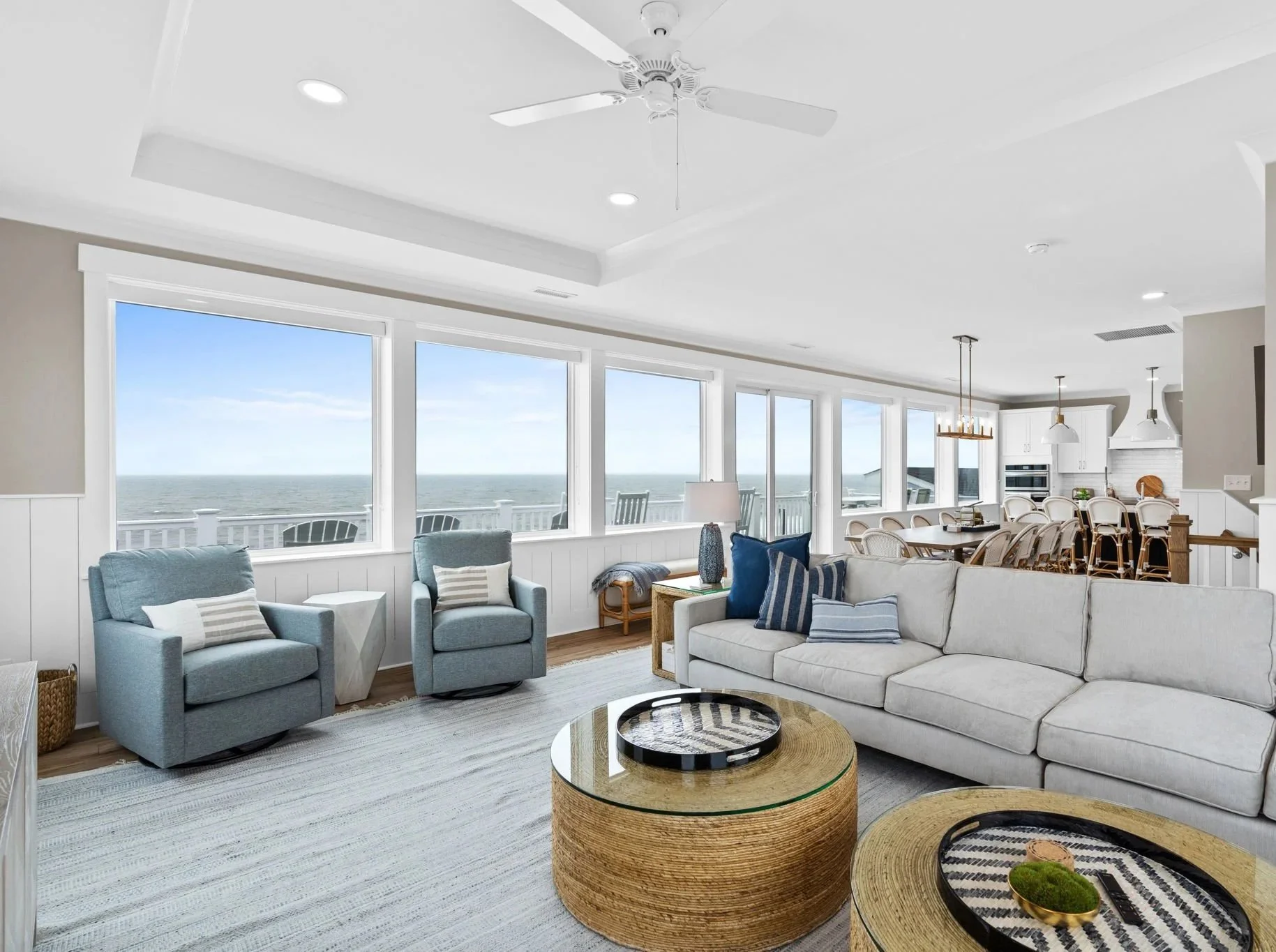
What is Modern Coastal Design (and Why It’s Changing)
Modern coastal home design has evolved significantly. If you’re picturing the classic “beach house” look with navy and white stripes, anchors, rope decor, and seashell accents…you’re not alone. It’s a style most people can instantly visualize.
That look had its moment, but because it became so widely used, it no longer feels as original or elevated as it once did. Today’s coastal homes, especially in places like Wilmington and surrounding coastal Carolina communities, are moving toward a more elevated, refined aesthetic:
Softer, neutral palettes inspired by the coastal
Clean lines with thoughtful, intentional layering
Natural materials like wood, linen, and sisal
A focus on creating a coastal feeling, rather than a theme
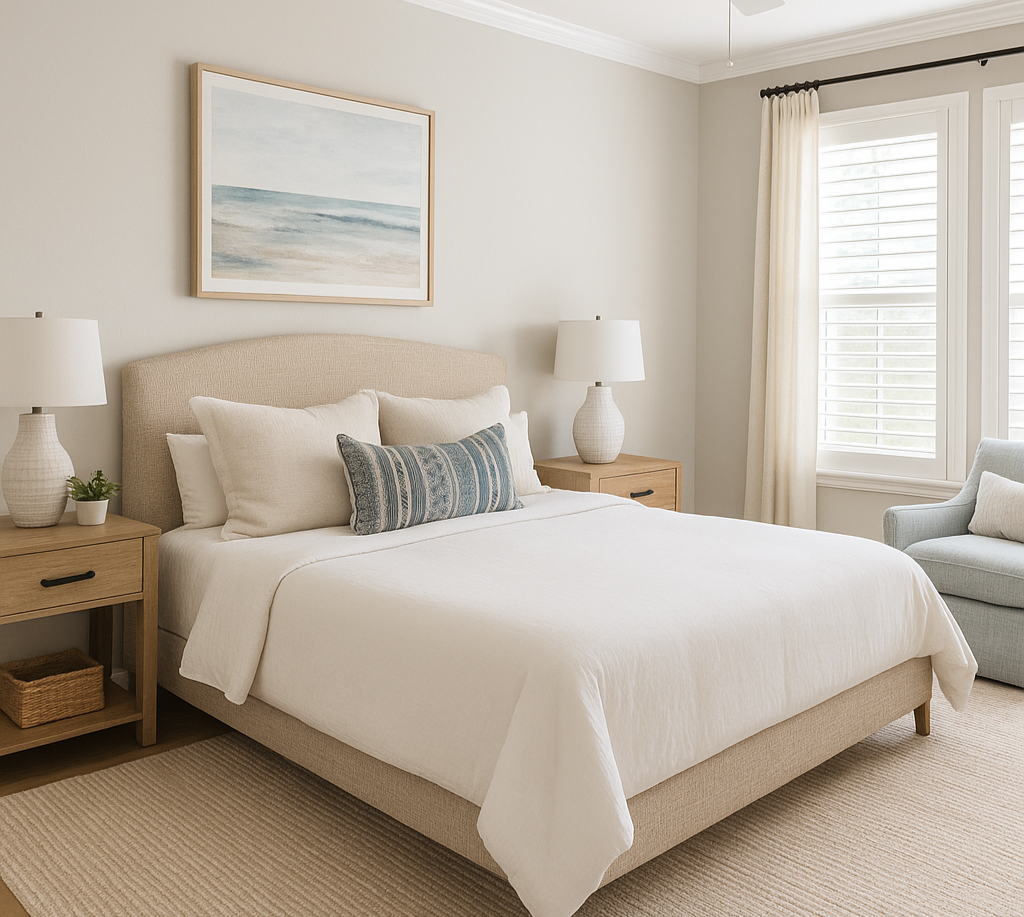
Why “Beachy” Coastal Design Feels Dated Today
Traditional coastal interiors aren’t wrong, they’re just overused. As design trends evolve, homeowners are moving toward spaces that feel more personal, elevated, and less theme-driven.
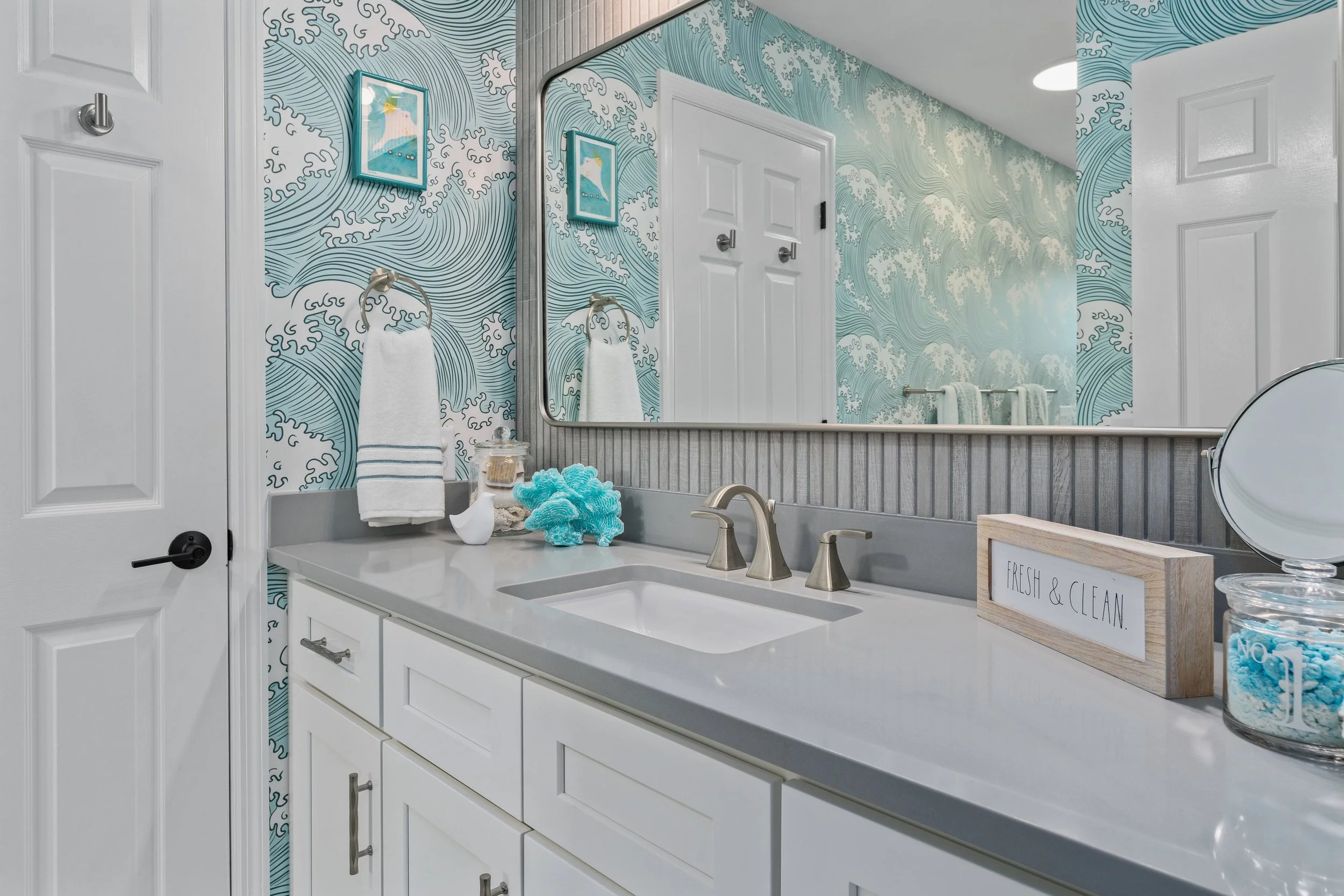
Common elements of the “beach house” style include:
Heavy navy and white contrast palettes
Nautical motifs like anchors, shells, and rope accents
Distressed or artificially weathered furniture
Word art signs like “Relax,” “Beach,” or “Salt Life”
Matching furniture sets with little variation
While these elements can still work in moderation, they often make interiors feel predictable rather than curated. Modern coastal home design focuses on texture, tone, and proportion instead of themed décor.
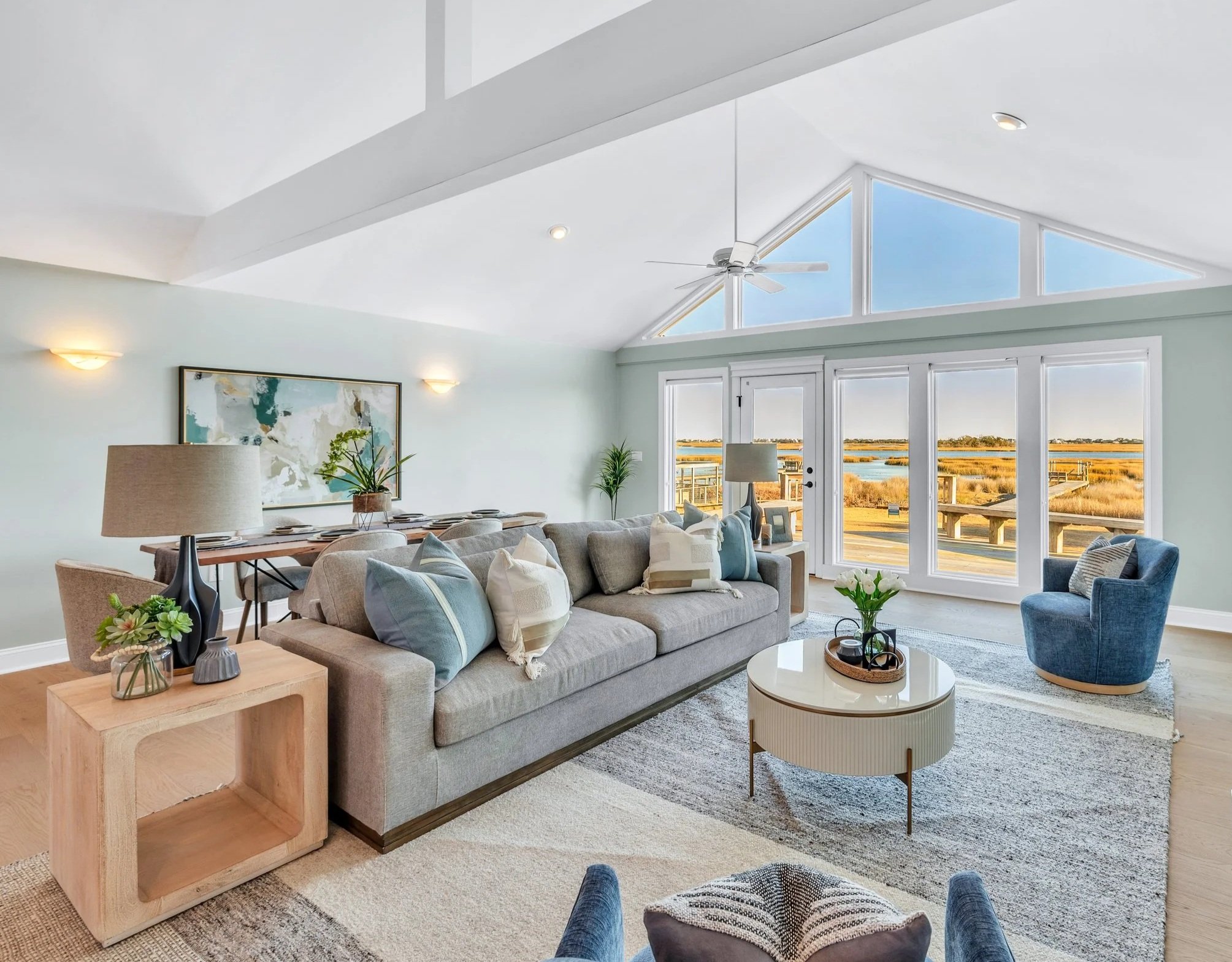
1. How to Achieve a modern coastal color palatte
Instead of high-contrast navy-and-white combinations, lean into softness and warmth:
Warm whites (alabaster, ivory, soft cream)
Sand-inspired neutrals and greige tones
Muted blue-greens such as sea glass
Earthy accents like clay, driftwood, and olive
This palette creates a layered, calming environment that feels coastal without being literal.
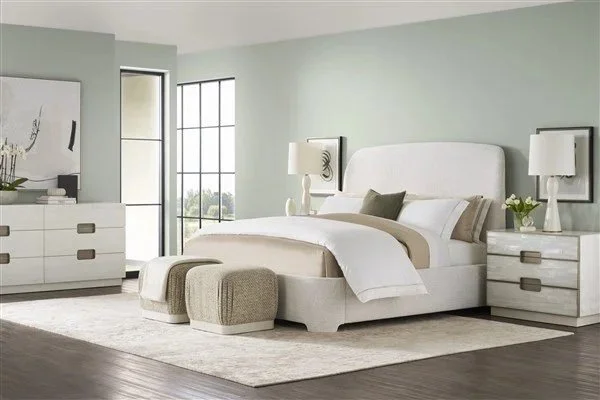
2. What are the best materials for modern coastal design
Modern coastal home design is built through materials, not motifs.
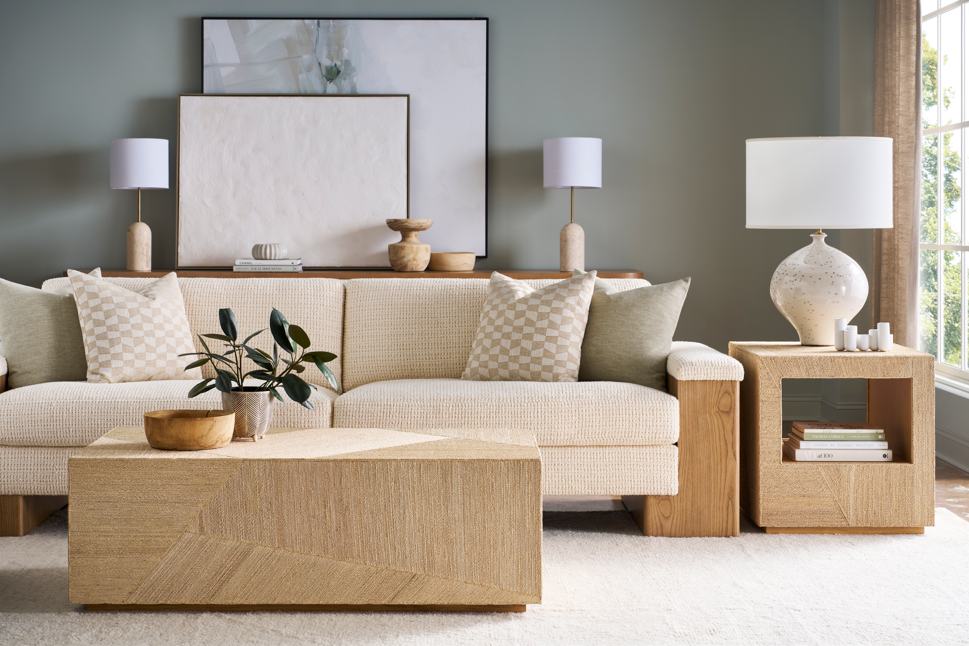
Rather than decorating with themed accessories, the focus shifts to tactile, natural surfaces. These materials add depth and warmth while keeping the space minimal and elevated:
Light oak or whitewashed wood finishes
Linen, cotton, and performance fabrics
Stone, quartz, or marble with subtle movement
Handmade ceramics and textured glass
Natural woven elements like jute and sisal

3. How to choose furniture for a modern coastal home
Shift from traditional beach-style furniture to modern coastal with structure and intention. Classic beachy pieces are often oversized, distressed or painted wood, and matchy, creating a relaxed but predictable look.
Modern coastal furniture keeps the comfort but adds refinement:
Cleaner, more tailored silhouettes
Mixed materials like wood, stone, and linen
Natural finishes instead of heavy distressing
A curated mix rather than matching sets
Focus on simplifying shapes, layering textures, and choosing pieces that feel intentional. The result is a look that’s still relaxed, but more elevated and timeless.
4. How to add Coastal Decor without overload
Modern coastal interiors don’t rely on themed décor. Instead, they layer subtle coastal references in a more refined way:
Abstract coastal or landscape art
Soft, organic shapes in accessories
Curated pattern mixing (stripes, subtle textures, tone-on-tone prints)
Natural greenery such as olive branches, palms, or pampas grass
Of course, a few fun figurines or seashells are fine in moderation!
Designing for Coastal North Carolina Homes
In coastal areas like Wilmington, Wrightsville Beach, and Topsail Island, we’re seeing a strong shift toward modern coastal home design that feels elevated, livable, and tailored to the environment.
Light, airy interiors that reflect the coastal environment
Elevated finishes that perform well for resale and short-term rentals
Durable, humidity-friendly materials suited for coastal living
Timeless design choices that appeal to both homeowners and guests
Warmly,
Christa
If you're updating a property, you may also want to explore:
Modern coastal Interior Design: FAQs
Q: What is the difference between coastal and modern coastal design?
A: Traditional coastal design often uses nautical themes and bold blue-and-white palettes. Modern coastal design is more minimal, focusing on materials, texture, and subtle coastal influence.
Q: Can you still use dark blue in modern coastal interiors?
A: Yes, but in a restrained way. Soft, muted blues and sea-glass tones work best at large, rather than bold navy accent.
Q: Is modern coastal design good for resale value?
A: Yes. It appeals to a wider audience because it feels clean, updated, and timeless - especially in coastal markets like Wilmington, NC.
Q: How do I update my beach house without a full renovation?
A: Start with paint, furniture edits, updated lighting, and replacing themed décor with natural materials and textures.