

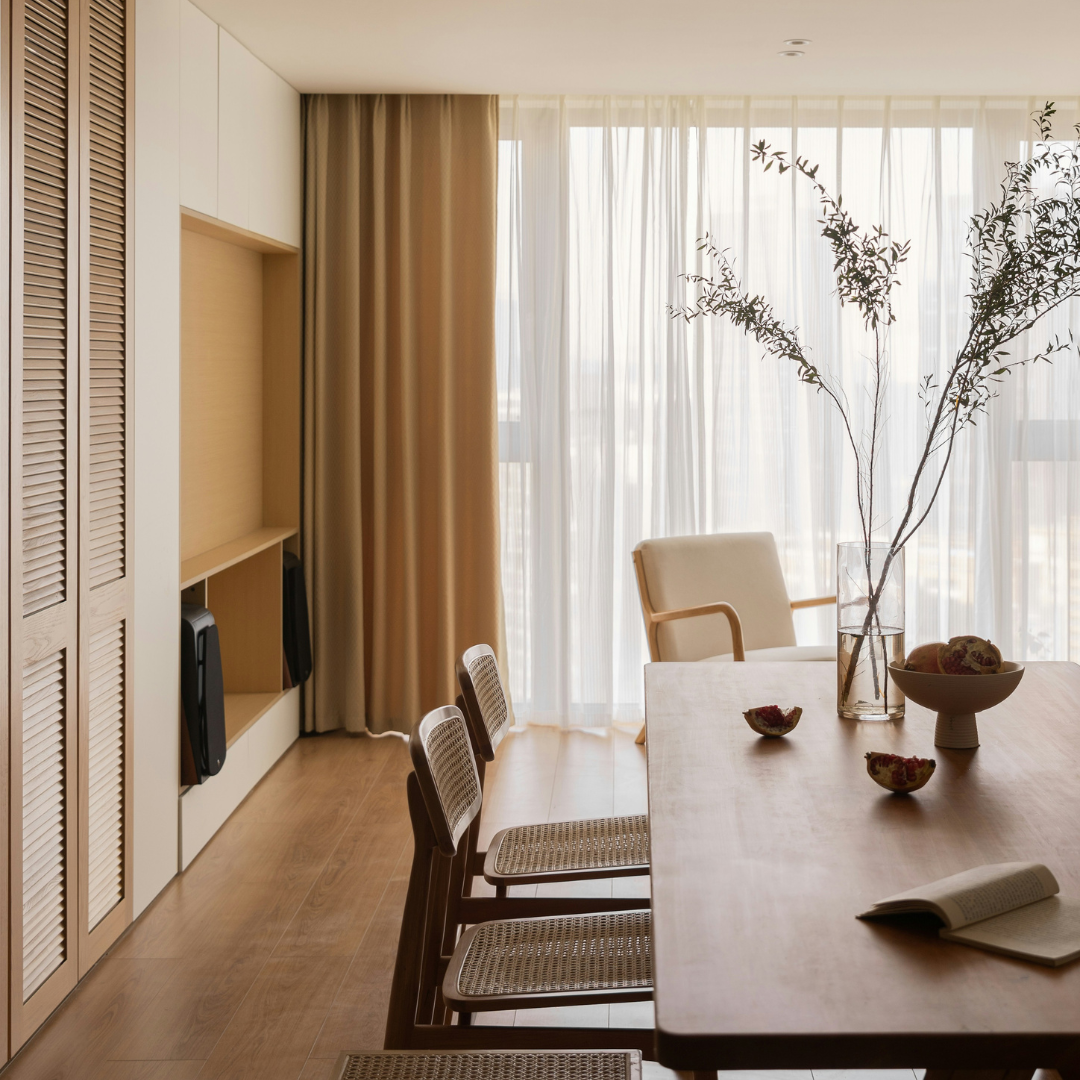
Window treatments are easy to overlook because, when they’re done correctly, they quietly elevate a space without calling attention to themselves. But when they’re not thoughtfully selected or installed, they can disrupt the proportions, balance, and overall polish of an otherwise beautiful room. Below, we’re sharing four common window treatment mistakes designers notice immediately — and how to avoid them.
Mistake #1: Mounting Treatments Too Low or Too Narrow
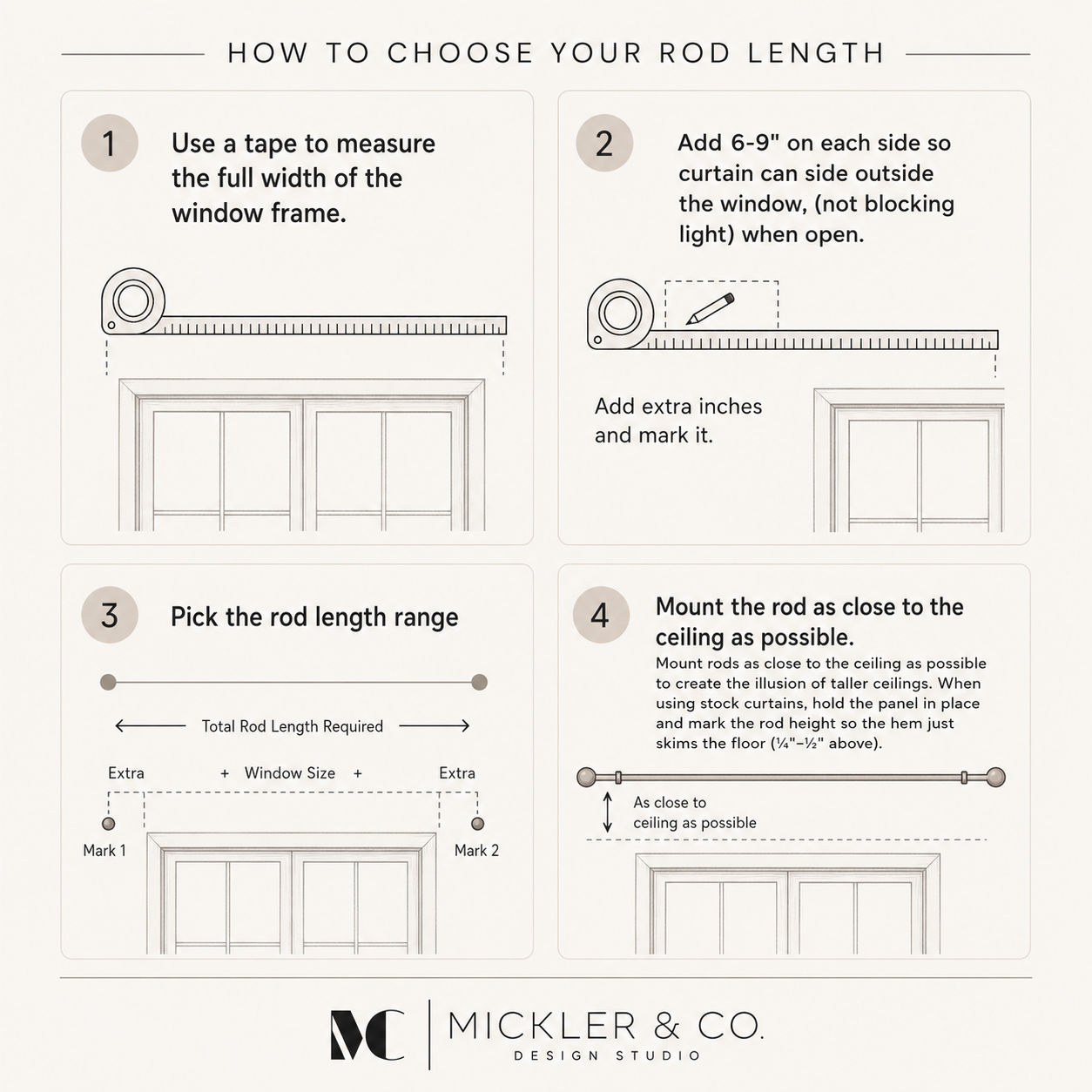
Mounting window treatments too low or too narrowly can visually shrink a space. Ceilings feel shorter, windows appear undersized, and the room can take on a cramped or unfinished look.
To avoid this, curtains should always be hung high and wide. Allow approximately 10–12 inches on either side of the window frame so panels can stack back properly when open. Mounting the rod as close to the ceiling as possible creates the illusion of taller ceilings and a more expansive room.
Need the right hardware? Browse our favorite ceiling-mounted tracks, extra-wide curtain rods, and designer drapery hardware that make windows appear larger and ceilings feel taller. Here are some of our favorites!
Budget-Friendly Designer Pick:
For more modest budget projects, we will often specify Lowes Home Improvement curtain rods. They’re priced well, look good and can be picked up easily at any location (or shipped if you don’t live near one). Lowes sells matching rings and finials as well so they’re easy to customize depending on type of curtain you’re using. For single windows you can typically use the adjustable rods up to 72”, while double windows need a 72-144” rod. If you’re planning on layering solid or patterned curtains with a sheer curtain behind it, a double rod is a great choice.
Industrial Style Curtain Rod
allen + roth 72-in to 144-in Black Steel Single Curtain Rod
Modern Curtain Rod
Origin 21 72-in to 144-in Brushed Gold Iron Single Curtain Rod with Finials
Transitional style Mix n Match Curtain Rod (Finial & Rods sold separately)
allen + roth 2 -Pack Brushed Gold Acrylic Curtain Rod Finials
allen + roth Mix Match 36-in to 72-in Brushed Gold Steel Single Curtain Rod
Double Curtain Rod
Hart & Harlow Olly 13/16-in 66-in to 120-in Satin nickel Steel Double Curtain Rod with Finials
As with most stocked items, we definitely don’t recommend using the installation hardware thats included (this goes for artwork & mirrors as well). Instead we use these, for a strong, secure connection to the wall.

Mistake #2: Choosing the Wrong Curtain Length
Curtains that are too short can feel abrupt and unfinished, while overly long panels may puddle awkwardly on the floor. Much like tailoring clothing, window treatments require precise measurements to achieve a polished result.
Always measure from the rod placement to just a few inches above the floor, accounting for hardware details such as ring or grommet height. These small adjustments make a significant difference in the final look.

Designer Curtain Length Guidelines
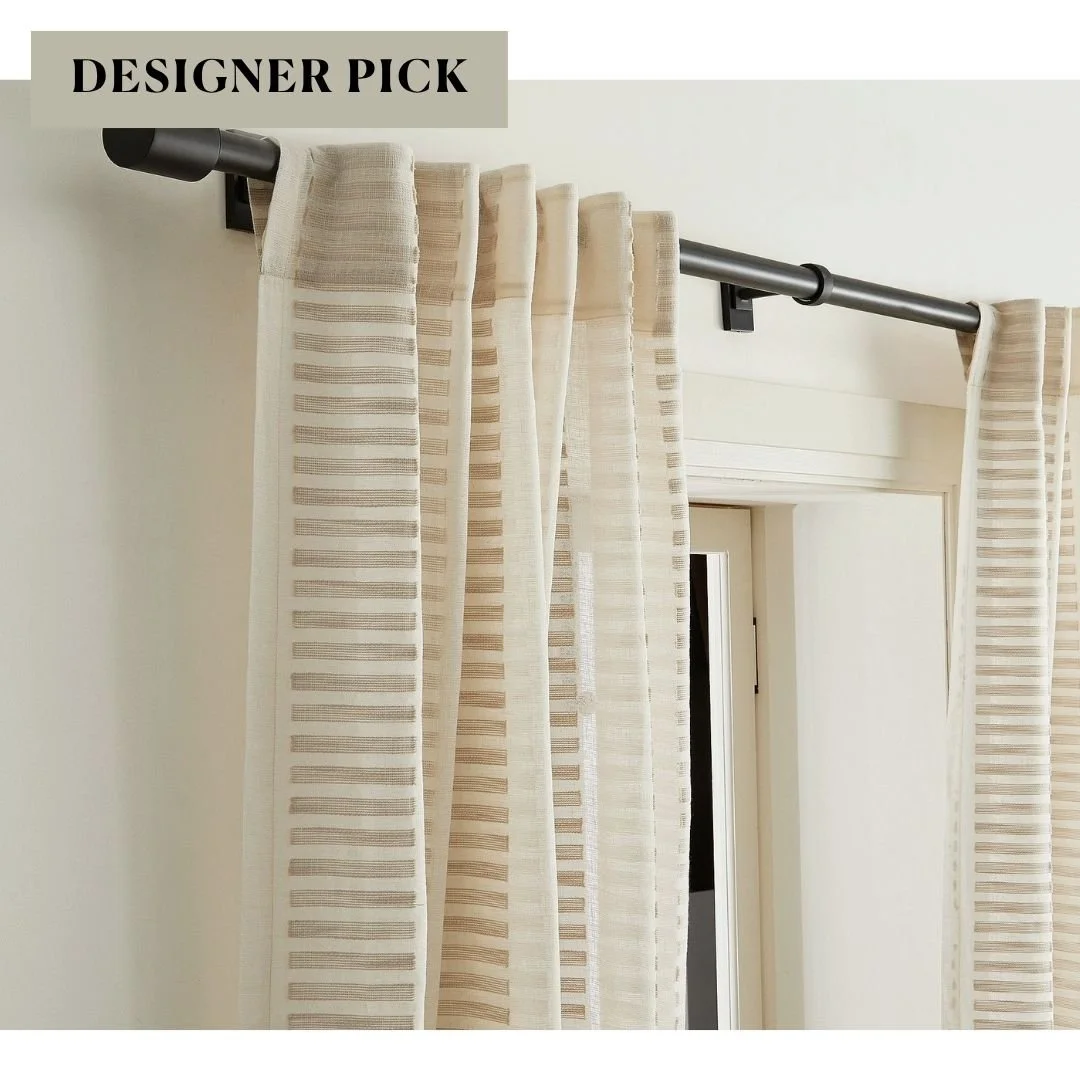
If your room has 8'-0" ceilings, aim for a 95" curtain panel. You may need to have the panels hemmed slightly, but the finished look is well worth the extra effort.
For 9'-0" ceilings, choose 105" or 108" curtain panels. Rooms with 10'-0" ceilings and higher can typically accommodate 108" or 120" panels, depending on ceiling height and rod placement.
These are common standard curtain lengths available from many retailers. If you're investing in custom window treatments, your fabricator or installer will take precise measurements and recommend the ideal finished length for your space.
Shop by Ceiling Height
8'-0” CEILINGS (96”)
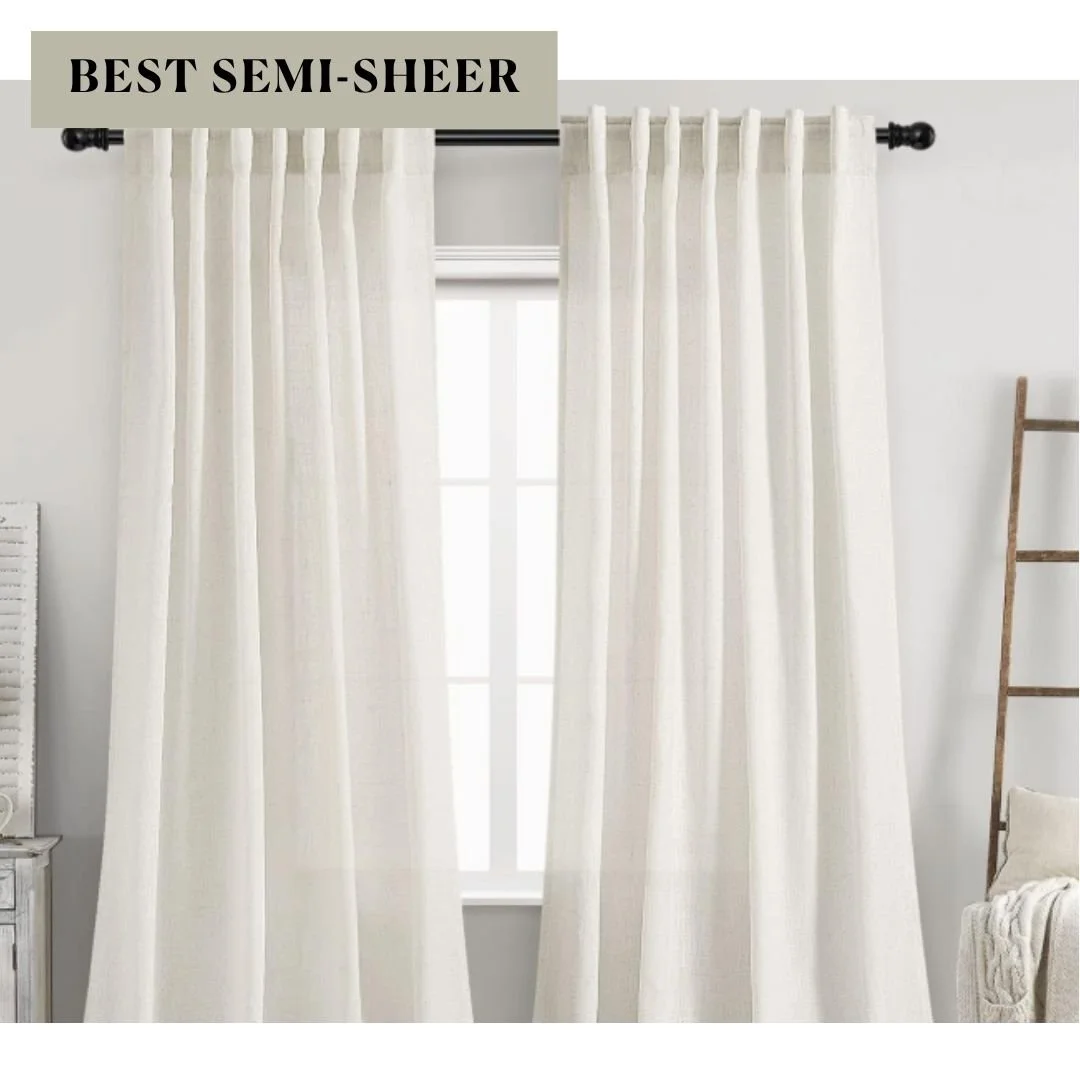
9'-0” CEILINGS (108”)
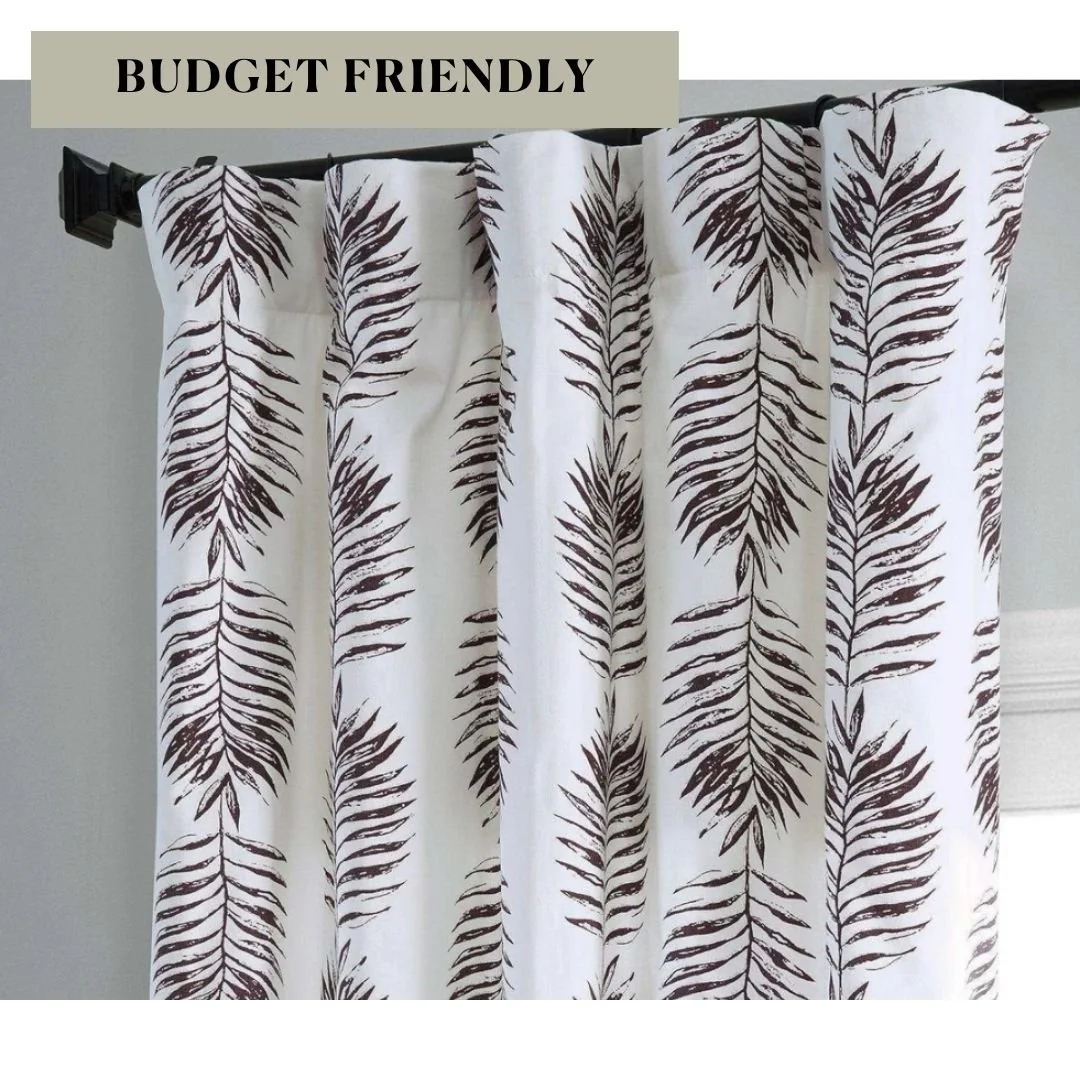
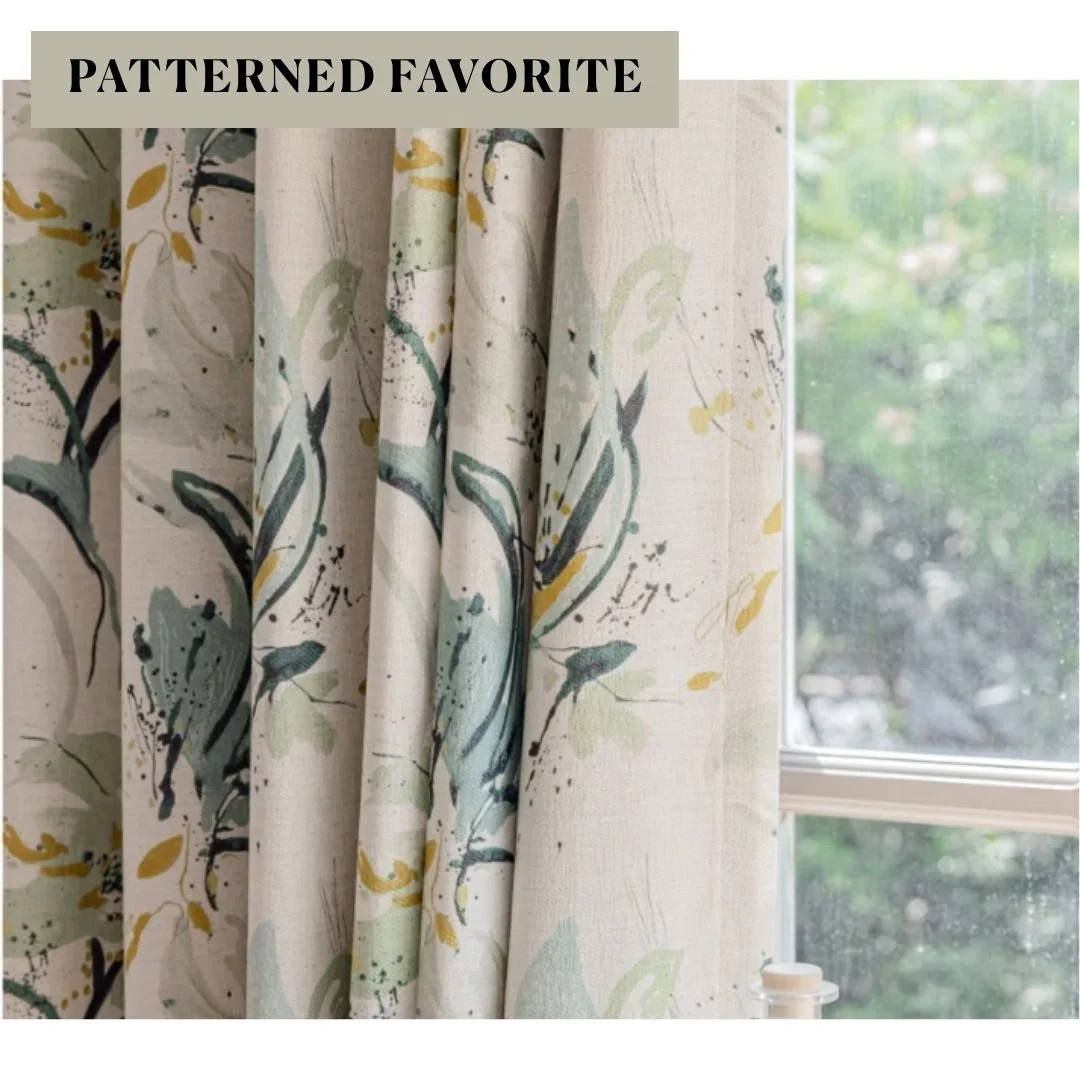
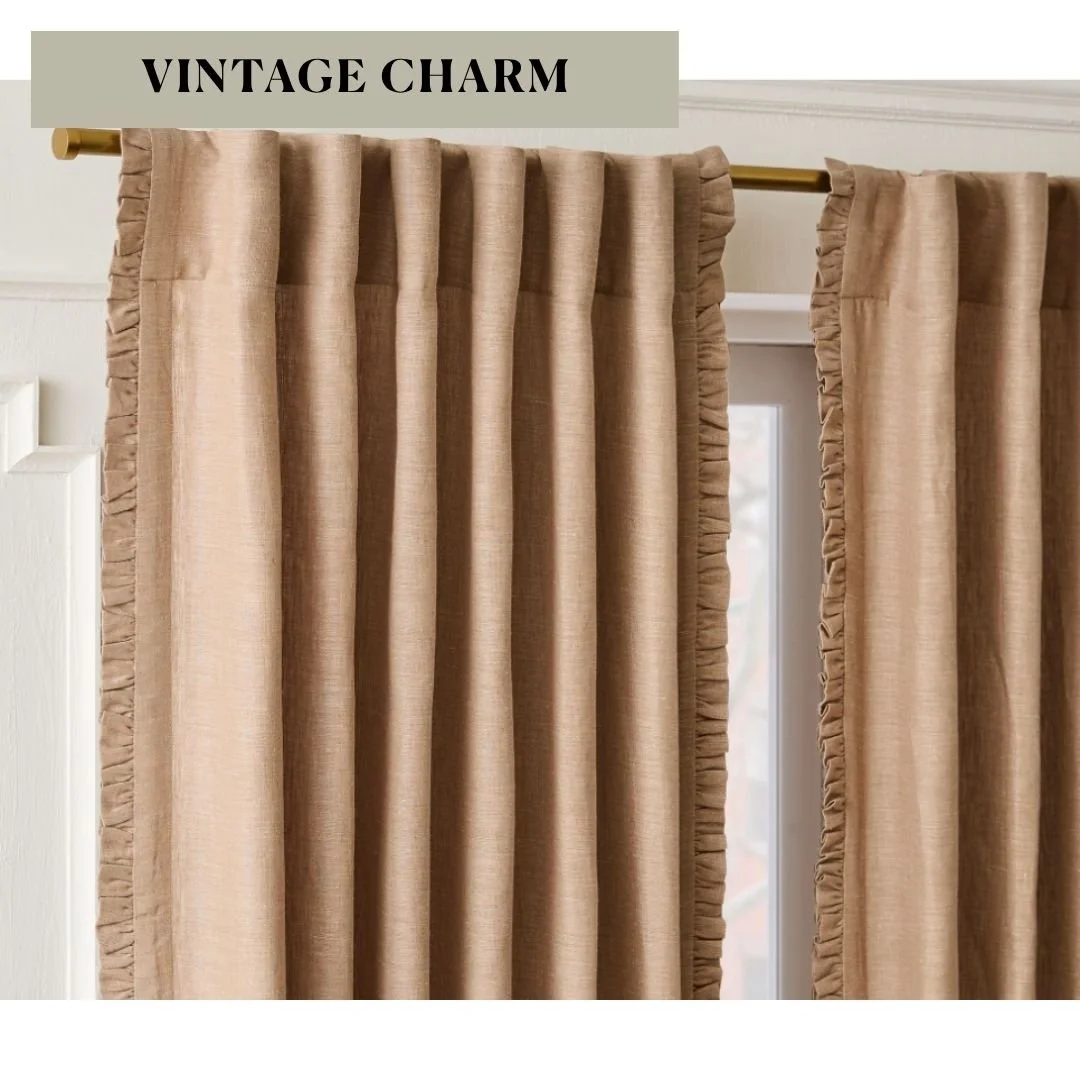
10'-0” CEILINGS (120”)
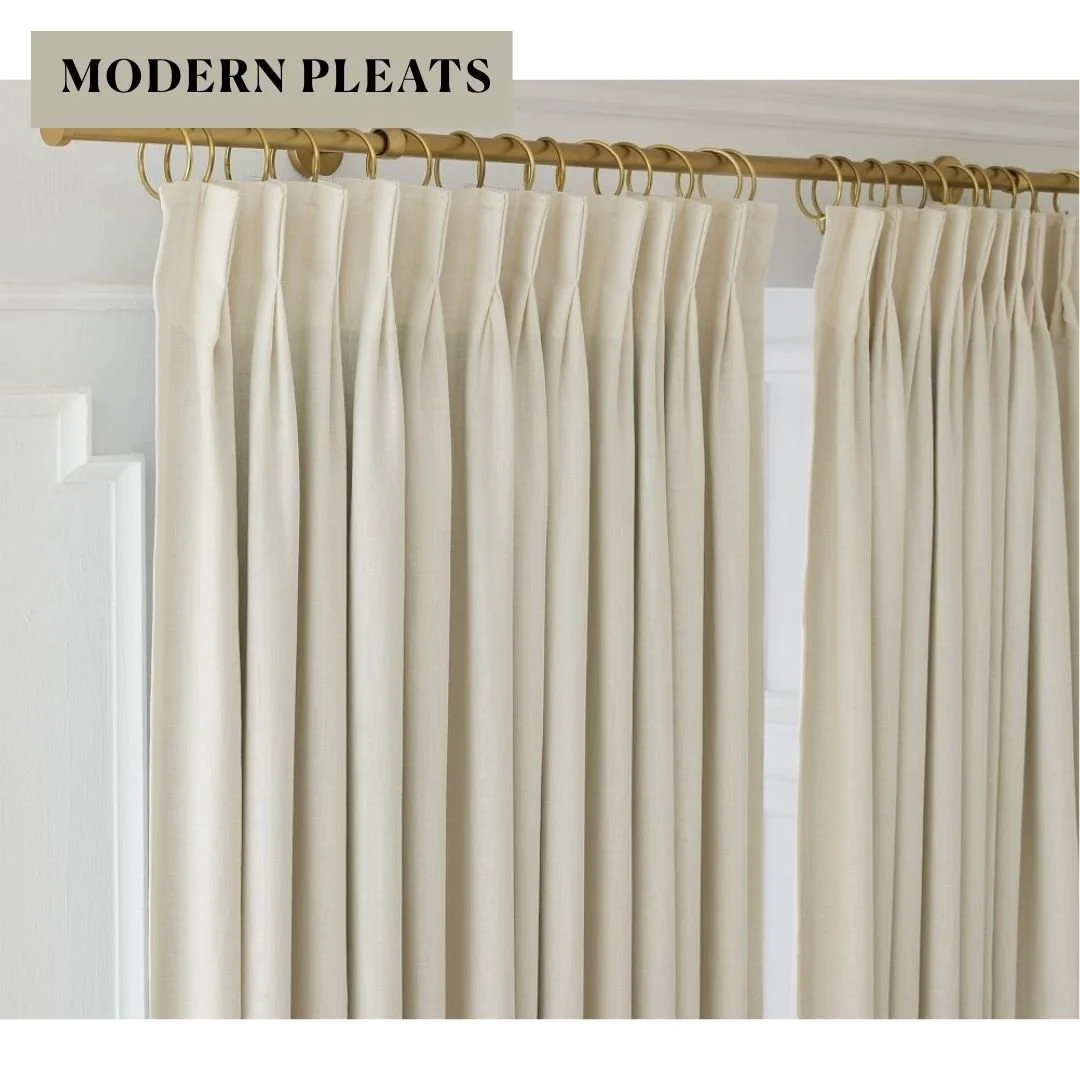
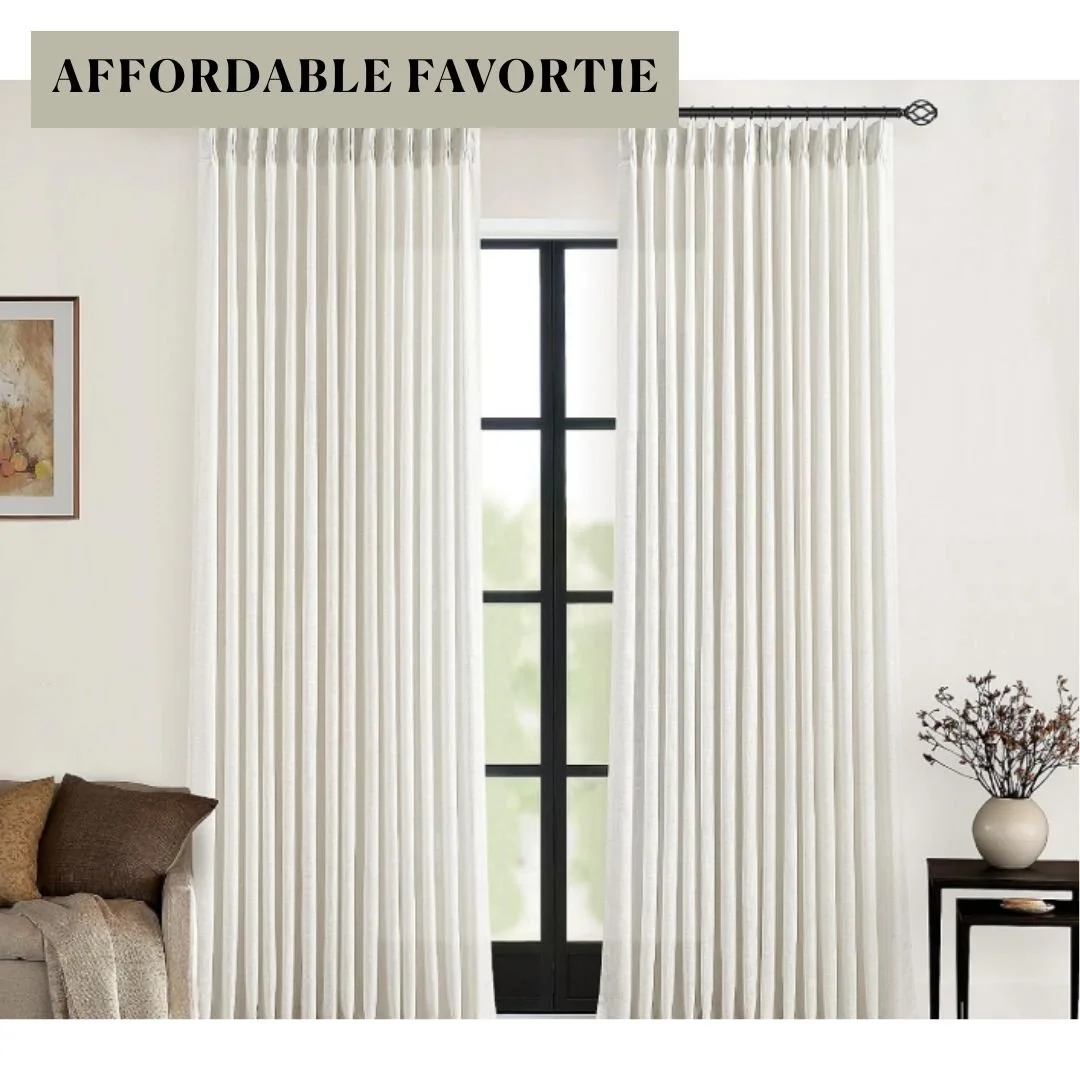
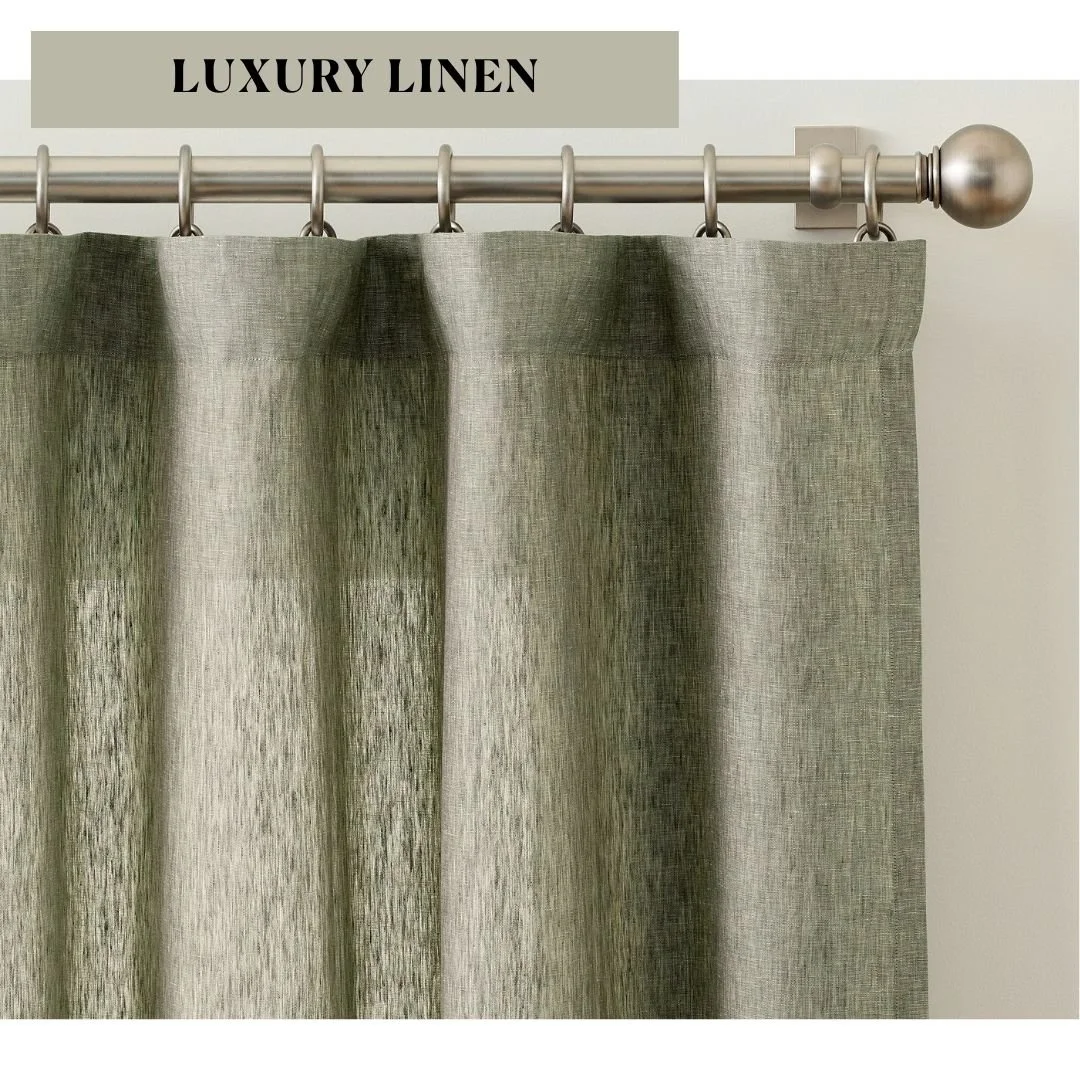
Outdoor Curtains
Want to see more of our favorite curtain panels, hardware, and window treatment solutions? Explore our curated designer curtain picks on LTK.
Mistake #3: Using Too Little Material
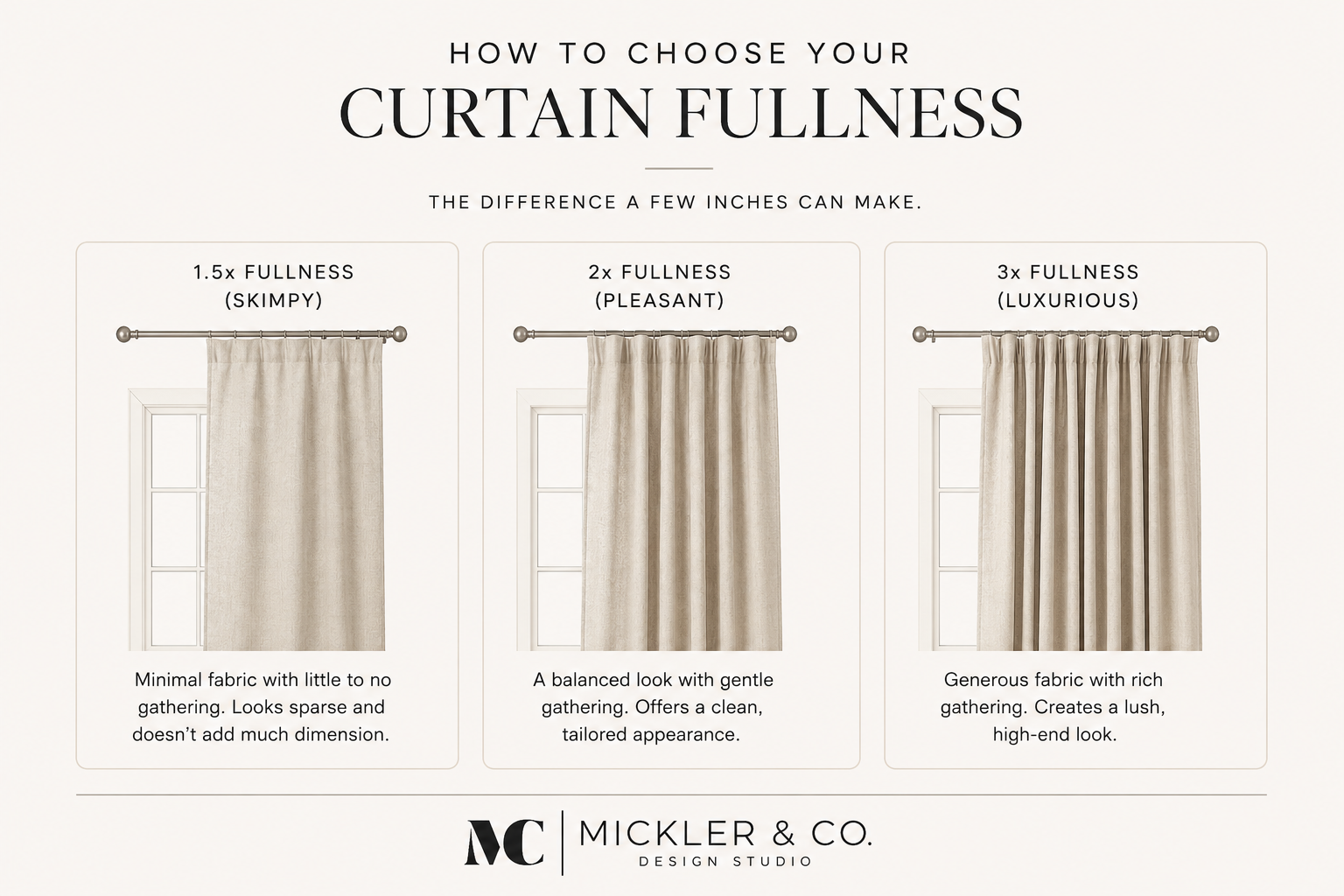
One of the most common mistakes we see is not using enough fabric. Curtains that barely cover the window tend to sit flat, lacking softness and dimension.
For a full, luxurious drape — whether panels are open or closed — plan for curtains that measure 2 to 2.5 times the width of the window. So if the window is 30” wide, the curtain needs to be 60”-75” wide to achieve a full look when closed.This ensures movement, depth, and a tailored appearance.
Pro Tip: Place one curtain ring or grommet on the outside of the mounting bracket to help panels stay in place, maintain clean lines and prevent the curtain from sliding away from the finial (end piece).
Mistake #4: Forgetting Functionality
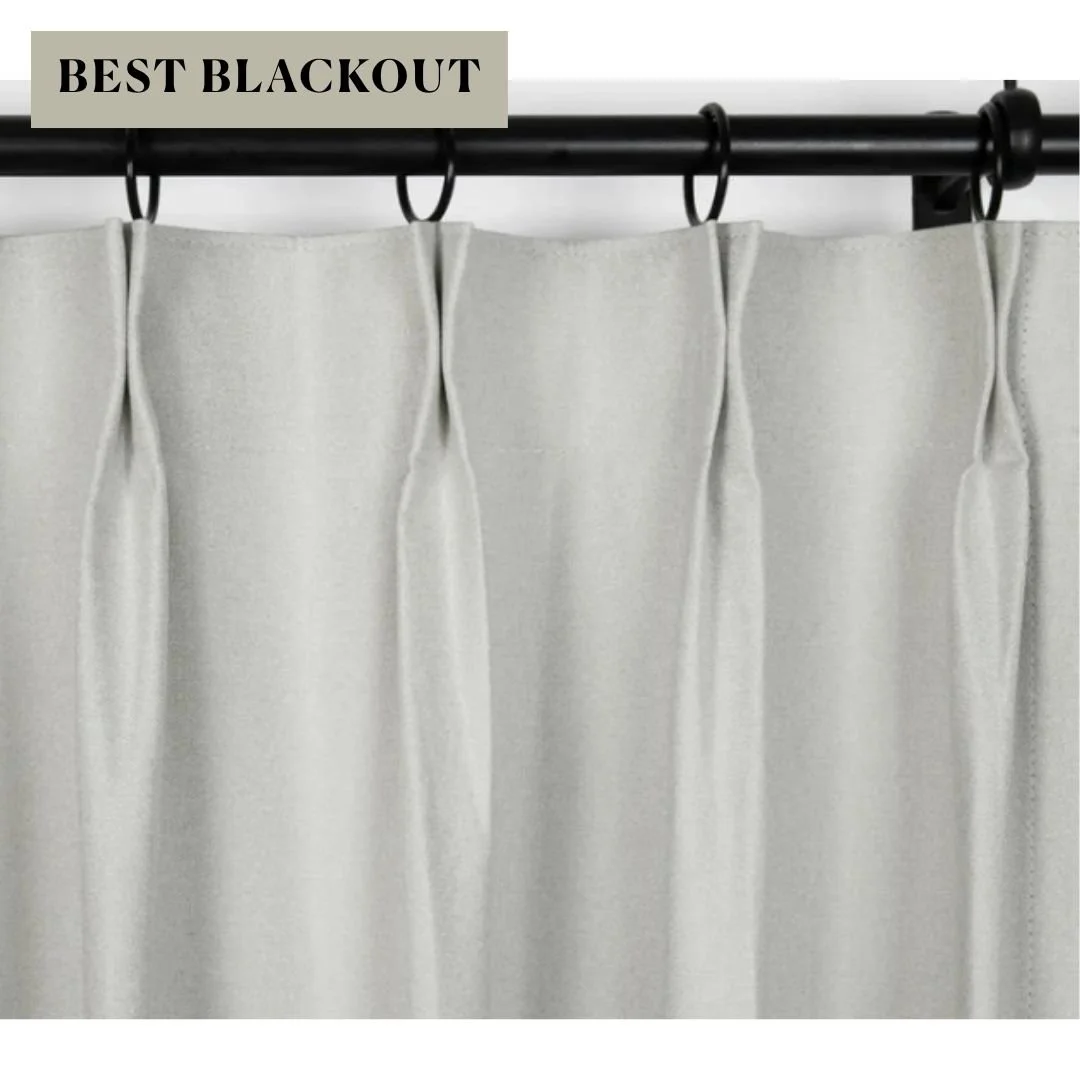
Beyond aesthetics, window treatments should support how you live in your home. Consider what each space truly needs — whether that’s blackout lining for privacy, motorization for tall or hard-to-reach windows, or light-filtering options for sun-facing rooms.
Layering treatments is often the most effective solution. Sheers paired with blackout panels allow flexibility throughout the day, while roller or woven shades introduce natural texture alongside practical benefits.
Need Help Selecting Window Treatments?
Whether you're building, renovating, or refreshing your home, we help homeowners throughout Wilmington, NC select window treatments that fit their architecture, lifestyle, and design style.

Designing a home at this level requires more than good taste.
If you’re planning a full-service interior design project in Wilmington or the surrounding coastal area, our team creates refined, livable interiors tailored to how you live — not one-size-fits-all solutions.
Book a discovery call today.
Warmly,
Christa